DONATE

Samuel Sánchez wins an ERC Consolidator Grant to study the collective behaviour of self-propelled nanorobots
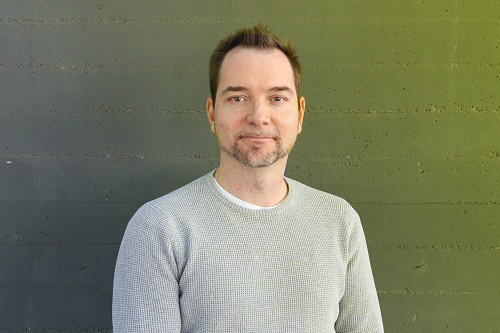

Samuel Sánchez, Group Leader at IBEC and ICREA Research Professor, has been awarded the prestigious “Consolidator Grant” of the European Research Council (ERC). With his i-NANOSWARMS project, Sánchez and his team at the Smart Nano-Bio-Devices Group will study the collective behaviour of nanorobots capable of self-propelling, and thus study their possible application in drug delivery and imaging diagnosis.
The highly sought-after ERC Consolidator grants are awarded to EU-based principal investigators with at least seven and up to twelve years of experience after his PhD who have demonstrated talent and scientific potential.
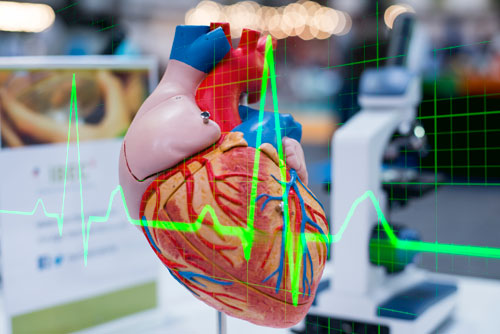
A research team develop biotransistors able to hear small beats of live

Researchers at IBEC and ICMAB develop a flexible, cheap and biocompatible transistor platform able to record an electrocardiogram of cells and micro-tissues during long periods of time.

The platform, based on organic transistor technology (EGOFET), can also measure the effect of drugs on beating cells, as cardiomyocytes, opening the door to several applications such as implantable devices for health.

First bioimplant with stem cells to regenerate the heart

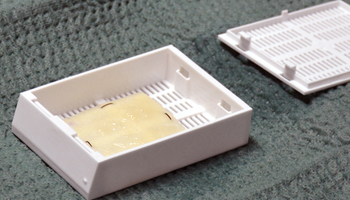
The team led by Daniel Navajas, principal investigator at IBEC, together with the Blood and Tissue Bank have developed a bioimplant of stem cells of about 16 cm² that is applied directly to the heart. The bioimplant is composed of decellularised human pericardium and enriched with stem cells from umbilical cord, of great plasticity and, therefore, capable of regenerating tissues.

IBEC coordinates a project to promote skin regeneration using nanoparticles and 3D printing

Elisabeth Engel, principal investigator of the “Biomaterials for regenerative therapies” group at IBEC will coordinate a three-year project with the aim of boosting skin self-regeneration. This transnational European consortium composed of four more partners will develop the project over the next 3 years, including Dimitrios Zeugolis (University of Ioannina, Greece), Joan Pere Barret (Hospital Universitari Vall d’Hebron, Spain), Olivier Stephan (Université Grenoble-Alpes, France) and Denis Barbier (MicroLight 3D, France).

The project falls under the scope of EuroNanoMed3 programme, and the consortium will receive a total of 747.000 € through the corresponding national funding agencies of the countries involved. In particular, the “Agencia Estatal de Investigación” (Ministerio de Ciencia, Innovación y Universidades) will fund IBEC’s contribution with 190.000 €.

IBEC bioengineers contribute to a heart implant

A group from the Institute for Bioengineering of Catalonia (IBEC) led by Daniel Navajas contributes to an operation designed to repair the heart tissue of a 70-year-old patient who had suffered a heart attack. This was made possible by the creation of a bioimplant enriched with stem cells. The operation is the result of the joint work of scientists, doctors and engineers over more than ten years.

PhD Discussions Sessions: Maria Arista

Super-resolution microscopy for understanding the formation and inhibition of influenza virus structures Maria Arista, Nanoscopy for Nanomedicine Super-resolution microscopy is a mighty tool that has the ability to study fluorescence … Read more

PhD Discussions Sessions: Maria Arista

Super-resolution microscopy for understanding the formation and inhibition of influenza virus structures Maria Arista, Nanoscopy for Nanomedicine Super-resolution microscopy is a mighty tool that has the ability to study fluorescence … Read more

PhD Discussions Sessions: Maria Arista

Super-resolution microscopy as a powerful tool for understanding the formation and inhibition of influenza virus structures in mammalian cells Maria Arista, Nanoscopy for Nanomedicine Super-resolution microscopy is a mighty tool … Read more

PhD Discussions Sessions: Maria Arista

Super-resolution microscopy as a powerful tool for understanding the formation and inhibition of influenza virus structures in mammalian cells Maria Arista, Nanoscopy for Nanomedicine Super-resolution microscopy is a mighty tool … Read more

PhD Thesis Defence: Roberto Paoli

Cell Culture interfaces for different organ-on-chip applications: from photolithography to rapid-prototyping techniques with sensor embedding Roberto Paoli, Nanobioengineering group