Inspiration from a carpenter’s toolbox
 IBEC’s Smart-Nano-Bio-Devices and Nanobioengineering groups have joined forces to solve the problem of random movement of micro- and nanomotors.
 IBEC’s Smart-Nano-Bio-Devices and Nanobioengineering groups have joined forces to solve the problem of random movement of micro- and nanomotors.
Samuel Sanchez’s group has been forging ahead with its creation of self-propelling micro- and nanodevices in the last few years. These chemically powered ‘swimmers’ are self-propelled by catalytic reactions in fluids – which could be the fluids of our body, or water – and have a number of promising applications, such as targeted drug delivery, environmental remediation, or as pick-up and delivery agents in lab-on-a-chip devices.

 Research led by the University of Manchester’s National Graphene Institute, with the collaboration with IBEC, reveals that water that’s only a few molecules thick – like the water that covers every surface around us – behaves very differently to normal, ‘bulk’ water.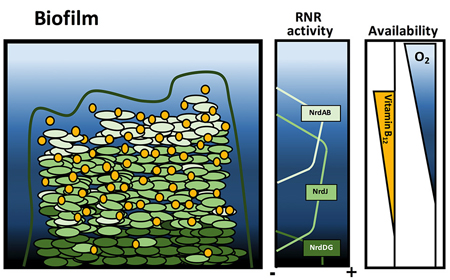
 IBEC’s Bacterial infections: antimicrobial therapies group has revealed the essential role played by a vitamin in the development of a common bacterial biofilm.
 Researchers at IBEC have discovered that cell division in epithelial tissues is regulated by mechanical forces.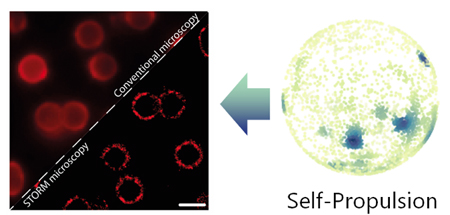
 Two IBEC groups have clubbed together to combine their expertise and reveal new knowledge that could advance the design of micro- and nanomotors for applications in health.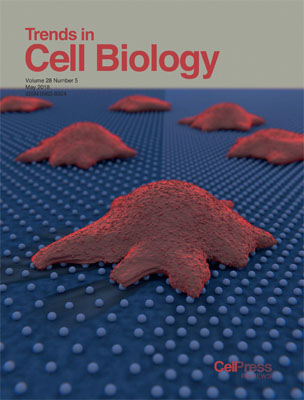
 Alberto Elosegui-Artola, Xavier Trepat and Pere Roca-Cusachs’ paper in Trends in Cell Biology has made the cover of the latest issue of the Cell-family journal.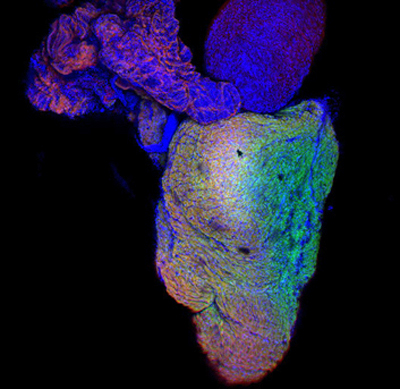
 A study carried out at CMR[B] in collaboration with IBEC and the UB has established that the ability of the heart to regenerate after a wound is related to the stiffness of its cellular environment and not only to the proliferative capacity of the cardiac cells, narrowing the window of regeneration to 48 hours after birth.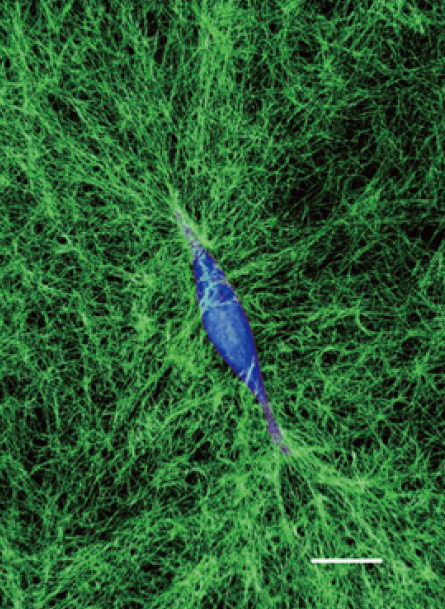
 Researchers at IBEC and MIT have shown that cells could use their environment to mechanically communicate with each other within tissues. It’s a bit like when an army cadet pulls some rope netting taut so that his friend can safely ascend.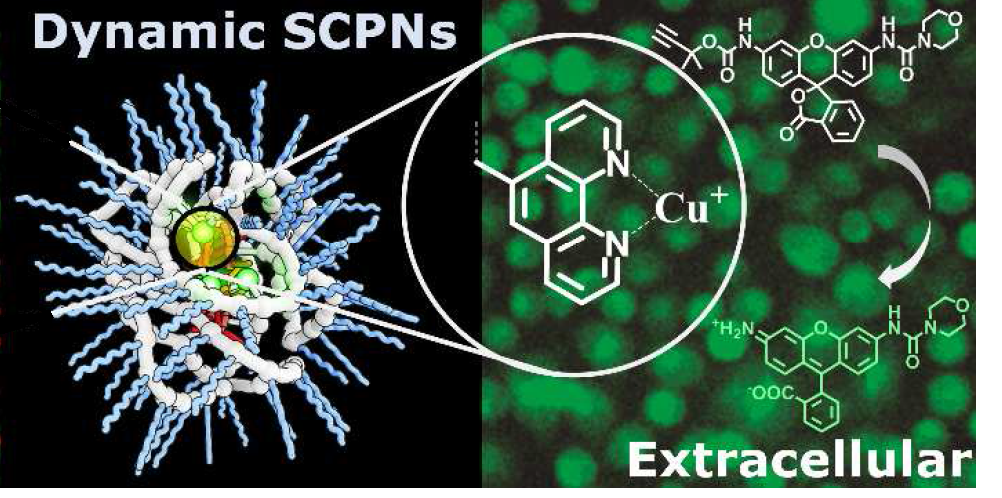
 The Nanoscopy for Nanomedicine group has studied Single-Chain Polymeric Nanoparticles (SCPNs) mimicking enzymes as possible drug activators in biological environments, like the living cell.