DONATE

Observed in vivo the collective movement of nanorobots 
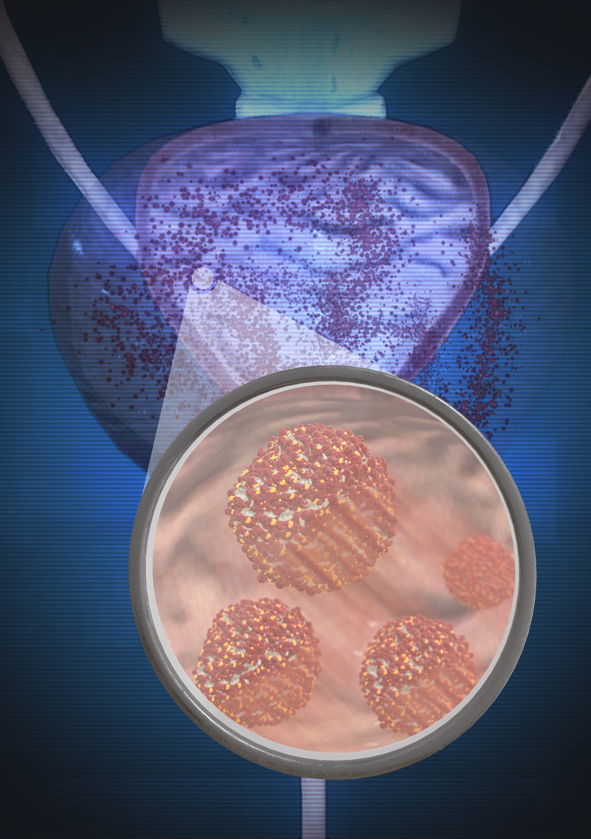
A team of researchers led by Samuel Sánchez from IBEC has monitored, for the first time, the behaviour of a swarm of nanorobots inside living mice. The study, published in the prestigious journal Science Robotics, reveals a coordinated movement, which could result in a very promising future in the field of precision medicine. 

Researchers develop enzyme-powered micromotors based on metal-organic porous materials

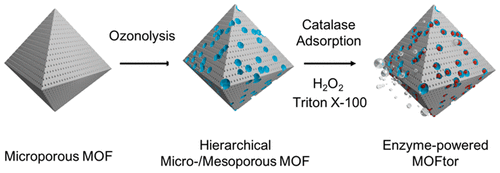
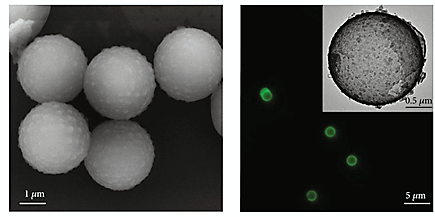
In a new article published in the prestigious Journal of the American Chemical Society, researchers describe how they successfully designed and fabricated bubble-propelled enzymatic micromotors built from a highly porous metal-organic framework (MOF). These new micromotors might lead to applications for drug delivery, and adsorption of pollutants.

Microrobots mobility and ionic strenght: theory and experiments reveal their relationship

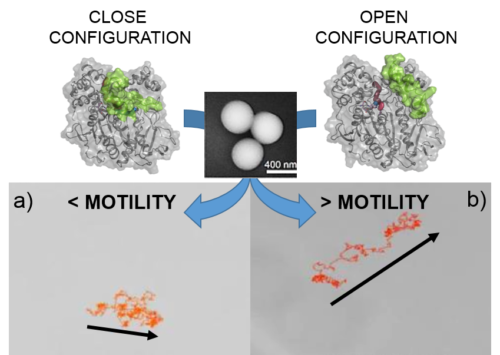
The group of ICREA Professor Samuel Sánchez at IBEC leads a work revealing that the self-propelled movement of microrobots depends on the amount of salts, called ionic strength, present in the liquid they navigate in. By combining theoretical and experimental work, researchers develop a model explaining the relationship between ionic strenght and mobility.

Controlling the speed of enzyme motors brings biomedical applications of nanorobots closer

A study by scientists at the Centro Nacional de Investigaciones Cardiovasculares (CNIC), the Universidad Complutense (UCM), Universidad de Girona (UdG), and the Institute for Bioengineering of Catalonia (IBEC), working together with other international centers, has overcome one of the key hurdles to the use of nanorobots powered by enzymes called lipases.

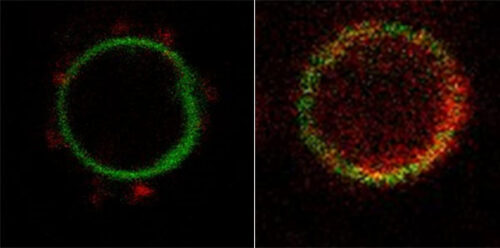
LipoBots: robust nanomotors for biomedical applications developed with encapsulation technology

Researchers at the Institute for Bioengineering of Catalonia (IBEC) and the Catalan Institute of Nanoscience and Nanotechnology (ICN2) have developed a new type of encapsulated enzyme nanomotors.

The called LipoBots, which could be used for medical applications. LipoBots are capable to self-propulsate and to retain their enzymatic functionality in conditions similar to those of the human stomach.
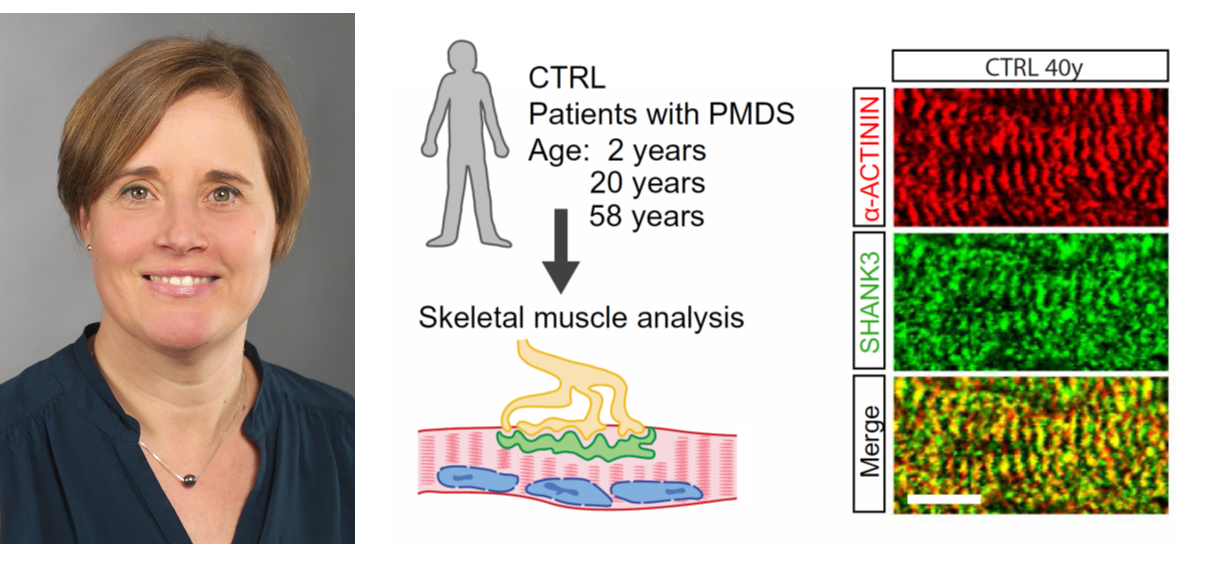
Maria Demestre, a senior expert in neuromuscular connections and diseases, joins IBEC from Germany

Maria Demestre, a senior scientist and expert in defining molecular alterations and neurophysiological factors in neurons, and skeletal muscle and neuromuscular connections leading to diseases, joins IBEC within the Smart Nano-Bio-Devices group.

In a recent paper led by Ulm University in Germany and co-authored and co-led by Demestre, researchers describe the effect of SHANK3 protein on muscle tissues of patients with autism disorder.