DONATE

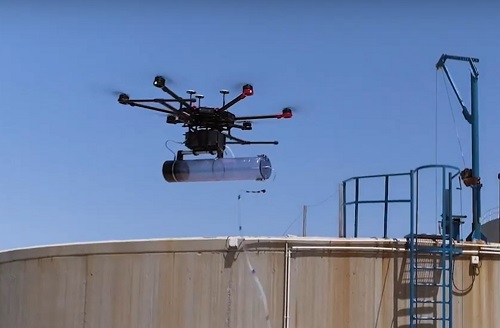
Electronic nose on a drone sniffs out wastewater plant stink

Researchers from Spain have engineered a portable electronic nose (e-nose) that’s almost as sharp as a human nose at sniffing out wastewater treatment plants’ stink. Coupled with a drone, the lightweight e-nose can measure the concentration of different smells, predict odor intensity and produce a real-time odor map of the plant for management. The method developed was published November 16 in the journal iScience.

Junior Project Manager at the Plataforma ISCIII Biobancos y Biomodelos.

Application Deadline: 30/11/2021
Ref: JPM-NM

The Pluripotency for organ regeneration group at the Institute for Bioengineering of Catalonia (IBEC) is looking for a Junior Project Manager to join IBEC in the frame of the project “Plataforma ISCIII Biobancos y Biomodelos” within the call Plataformas ISCIII de apoyo a la I+D+I en Biomedicina y Ciencias de la Salud. The project is supported by the INSTITUTO DE SALUD CARLOS III.

“Artificial smell” that determines the quality of food

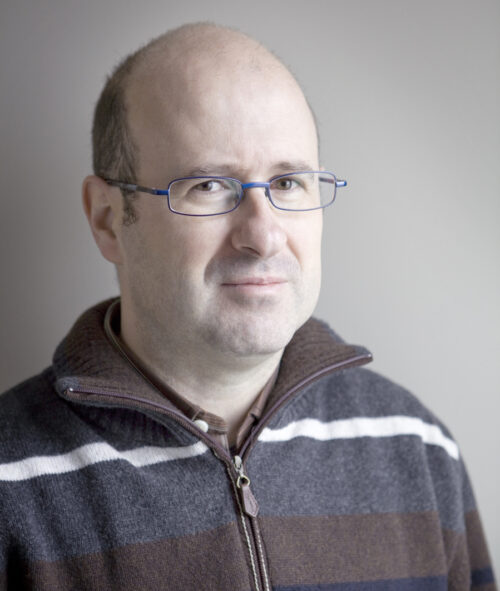
Researchers led by Dr. Santiago Marco, principal investigator in the Signal and Information Processing for Sensor Systems group and professor at the University of Barcelona (UB) of IBEC, appear in the media for their recent study in collaboration with the University de Córdoba in which a system capable of detecting fraud on food labeling with the analysis of its aroma has been created.

Predoctoral researcher at the Biosensors for Bioengineering Research Group

Application Deadline: 30/11/2021
Ref: PhD-JR

The Biosensors for Bioengineering group at the Institute for Bioengineering of Catalonia (IBEC) is looking for a a PhD student. Early Stage Researcher (PhD. student) to develop his/her PhD. thesis project on developing a 3D model of liver disease. The contract will be within the framework of a collaborative project with a pharmaceutical company whose objective is to develop a disease model for drug screening.

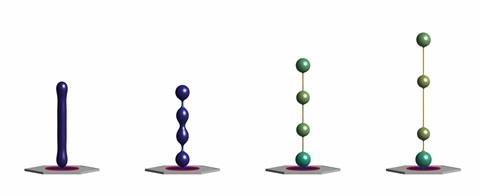
Researchers discover how cellular membranes change curvature depending on BAR proteins

A team of researchers at IBEC and UPC, led by Pere Roca-Cusachs and Marino Arroyo, study how BAR proteins, a family of molecules that bind curved cellular membranes, reshape these membranes. Scientists report in the journal Nature Communications, through both experiments and modelling, the dynamics of these membrane reshaping processes that occur both in normal cells or disease scenarios.

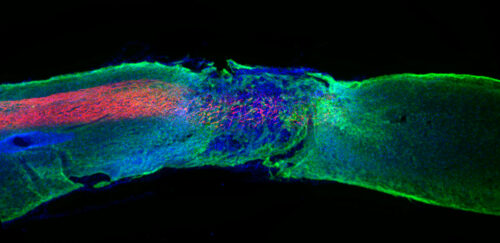
‘Dancing molecules’ repair severe spinal cord injuries in paralyzed animals

Researchers from the University of Northwestern, in the United States, and the Institute of Bioengineering of Catalonia (IBEC), develop a new injectable therapy that uses synthetic nanofibers to repair spinal cord lesions. Nanofibers, which contain ‘Dancing molecules’ effectively stimulate cellular receptors by promoting spinal cord regeneration. After a single injection, paralyzed animals treated with this new therapy were able to walk again in just four weeks. The article has been published in Science. 

IBEC Seminar: Rob Jelier

The effect of gene loss on adaptation | 3D cell shape analysis in embryos Rob Jelier, CMPG – Predictive Genetics and Multicellular Systems University of Leuven In this talk I … Read more

PostDoc Researcher at the Biomaterials for Regenerative Therapies Research Group


Application Deadline: 23/11/2021
Ref: PD-EE

The Biomaterials for Regenerative Therapies group at the Institute for Bioengineering of Catalonia (IBEC) is looking for a Postdoc position to work on the development of new platforms for skin regeneration. The contract will be within the framework of the European Consortium nAngioderm, an EuroNanoMed 3 project funded by the Spanish Ministry of Science and Innovation, whose objective is to develop devices based on nanotechnology and drug delivery tools able to address the healing of acute and chronic wounds.