DONATE

2022 BIST Conference on Precision Medicine

Precision Medicine: Putting discoveries to work The Barcelona Institute of Science and Technology (BIST) is pleased to announce its 2022 BIST Conference to discuss the latest developments in an area … Read more
El IBEC recibe cerca de un millón de euros para estudiar las enfermedades respiratorias graves causadas por virus

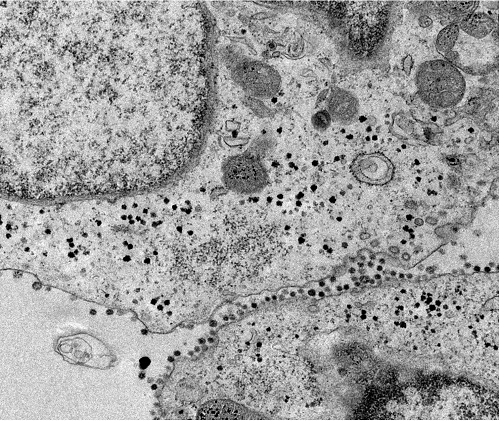
El projecto REACT, liderado por el Statens Serum Institut de Dinamarca, cuenta con la participación del Instituto de Bioingeniería de Cataluña (IBEC) que, con un presupuesto cercano al millón de euros de un total de siete, generará organoides epiteliales nasales humanos específicos como plataformas de validación y modelos preclínicos para investigar la interacción huésped-patógeno .

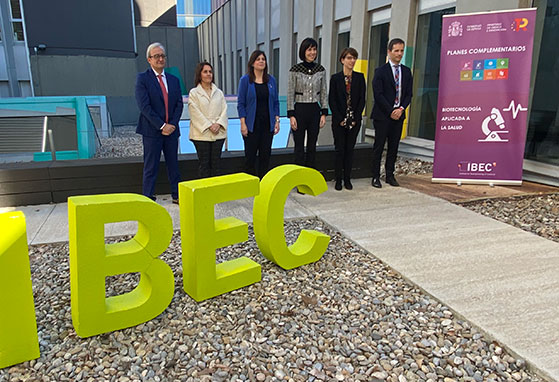
Complementary biotechnology plan presented at IBEC

The strategic research programme in the area of biotechnology applied to healthcare that was presented at the Institute for Bioengineering of Catalonia (IBEC), appears in the media by investing 32 million more in biotechnology.

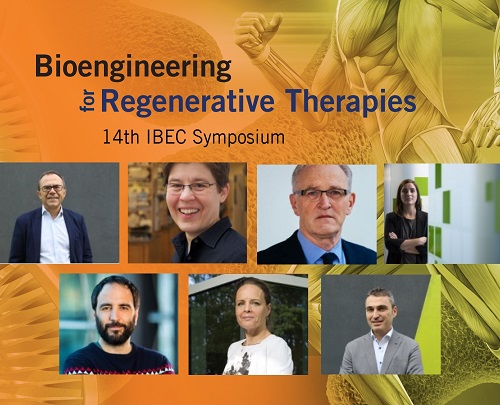
14th IBEC Symposium brings international experts and 300 attendees together

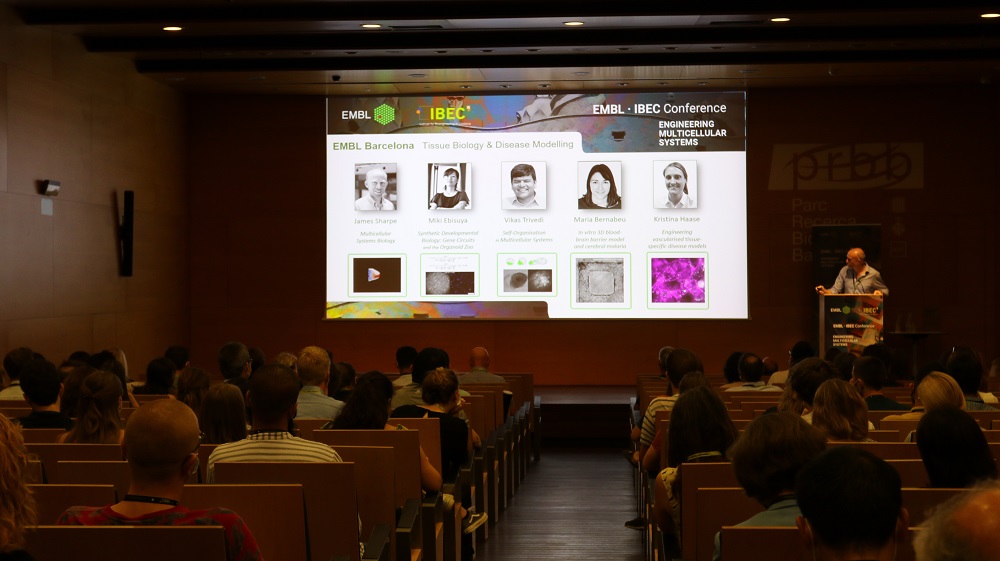
International experts and three hundred registered attendees met in the 14th IBEC Symposium, dedicated to regenerative therapies. Organised by the Institute for Bioengineering of Catalonia (IBEC), speakers presented the latest advances in mini-organs, organs on a chip, 3D bioprinting and tissue engineering, among others.

Fiona Watt, member of IBEC’s SAB, appointed as EMBO Director

Fiona Watt, Director of the Centre for Stem Cells & Regenerative Medicine at King’s College London, and member of IBEC´s Scientific Advisory Board (SAB), has been appointed as new Director of the European Molecular Biology Organization (EMBO). The British cell biologist will take up the appointment in early 2022.

Bioengineering against COVID-19 receives a new boost thanks to “La Marató”

Three projects of the Institute for Bioengineering of Catalonia (IBEC) will receive funding from “La Marató de TV3” to investigate different aspects of COVID-19. Thanks to the contributions received, the experts will deepen their understanding of the disease and its possible therapeutic solutions, study improvements in patient care processes, develop a system to predict the evolution of the respiratory system, and advance in the treatment of patients with pneumonia derived from COVID19.